Mapping the Origins of Data|Art:
Bringing the history of Data|art into an active conversation.
View PDF file
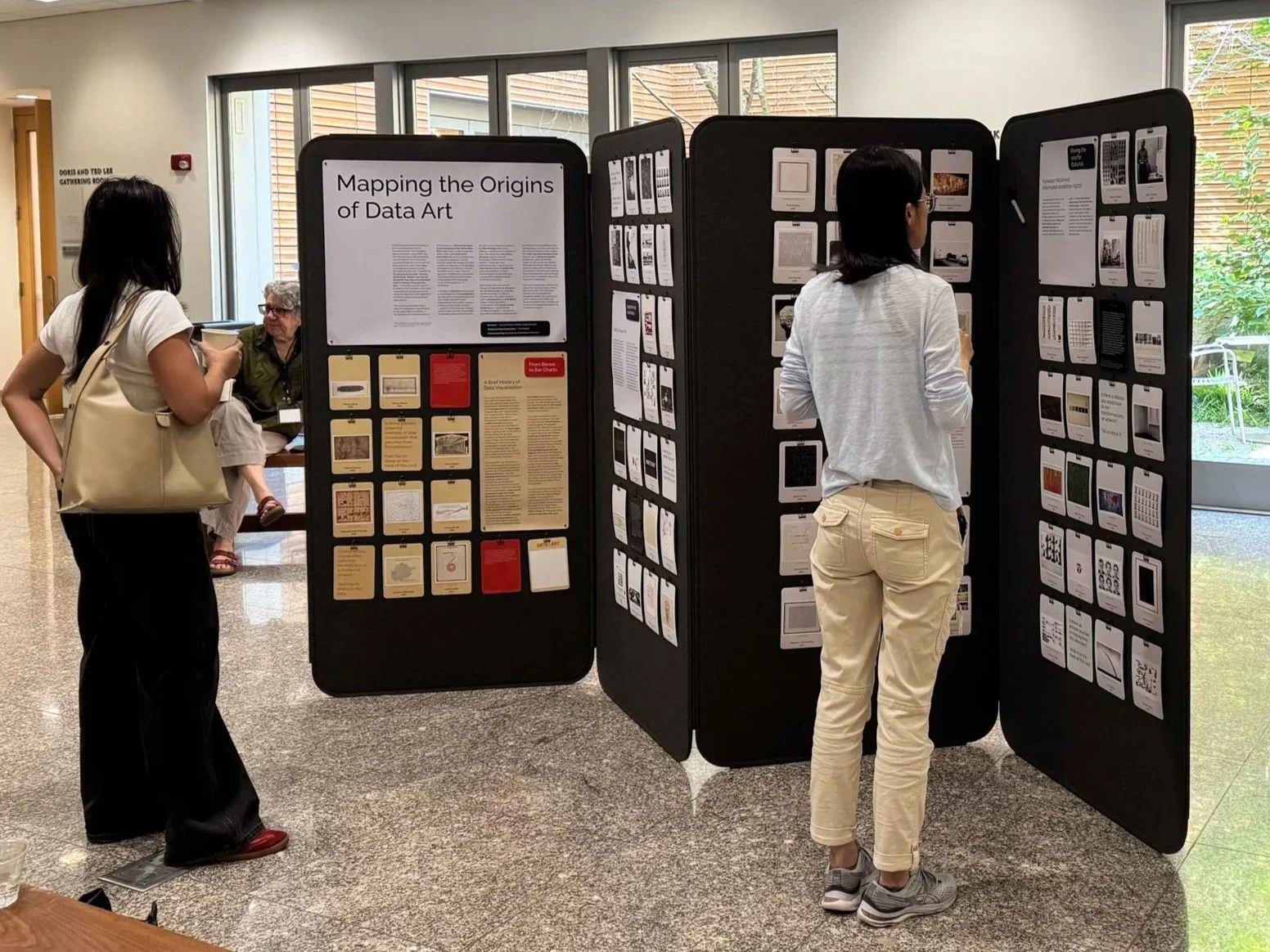
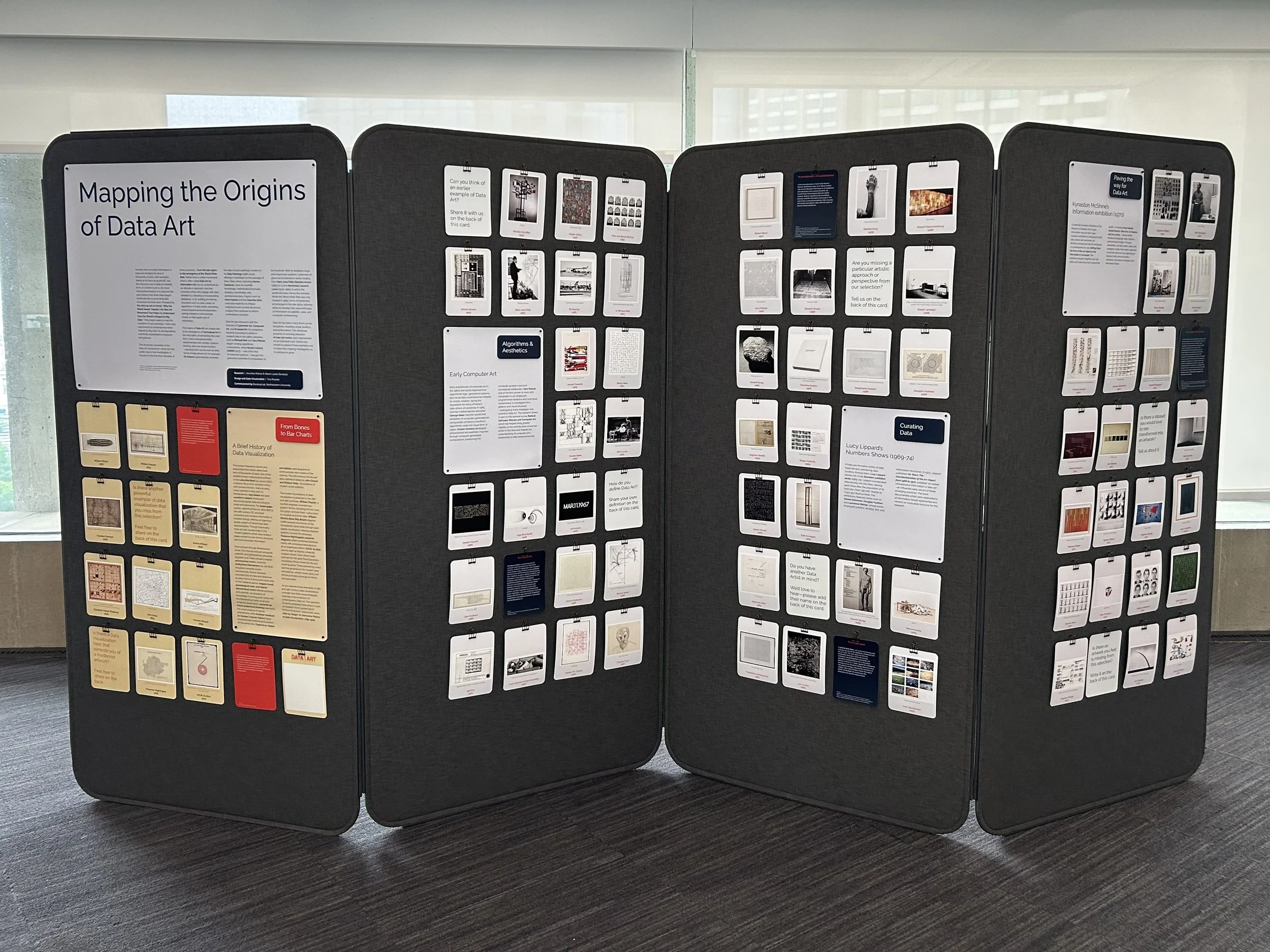
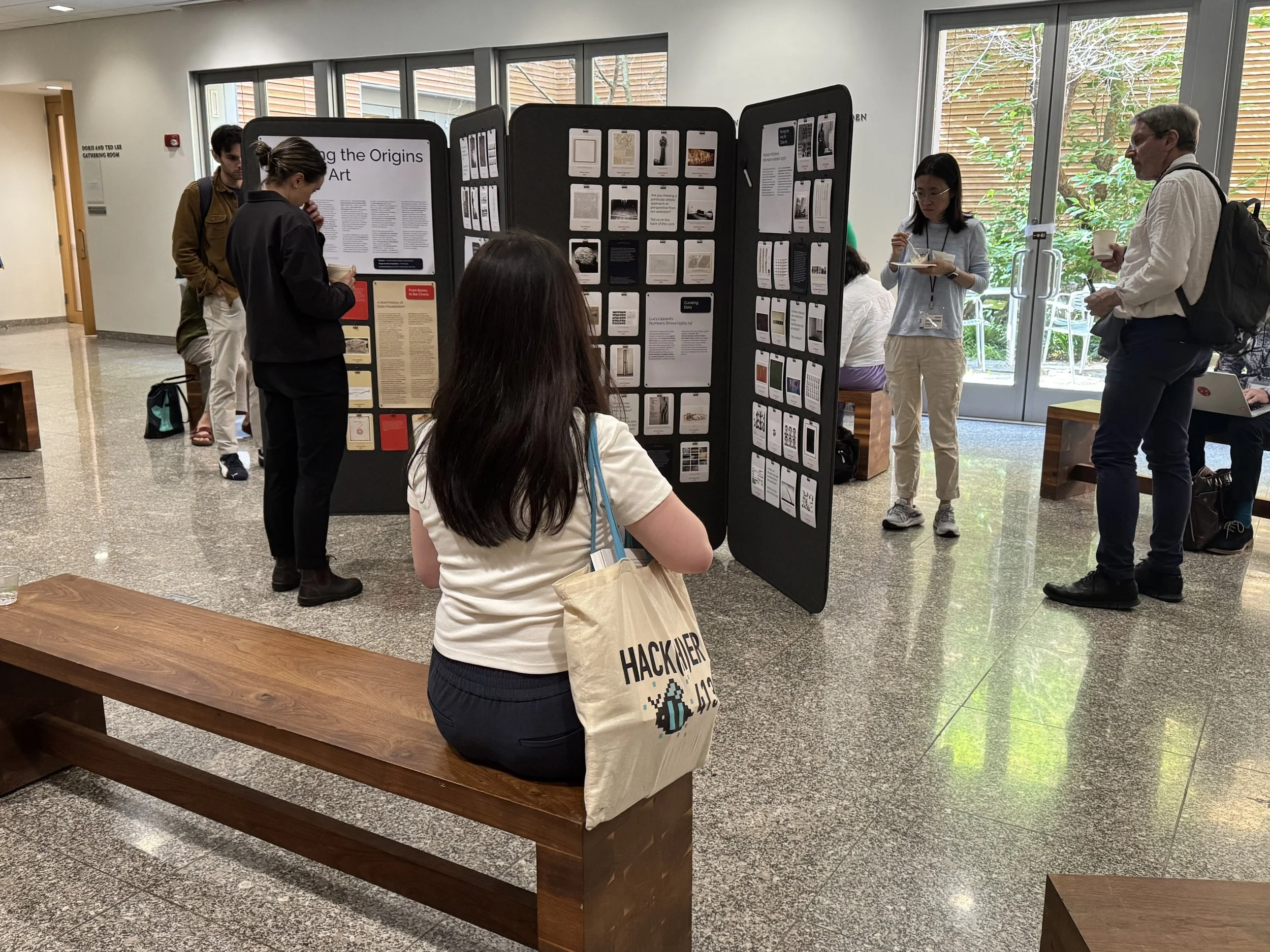
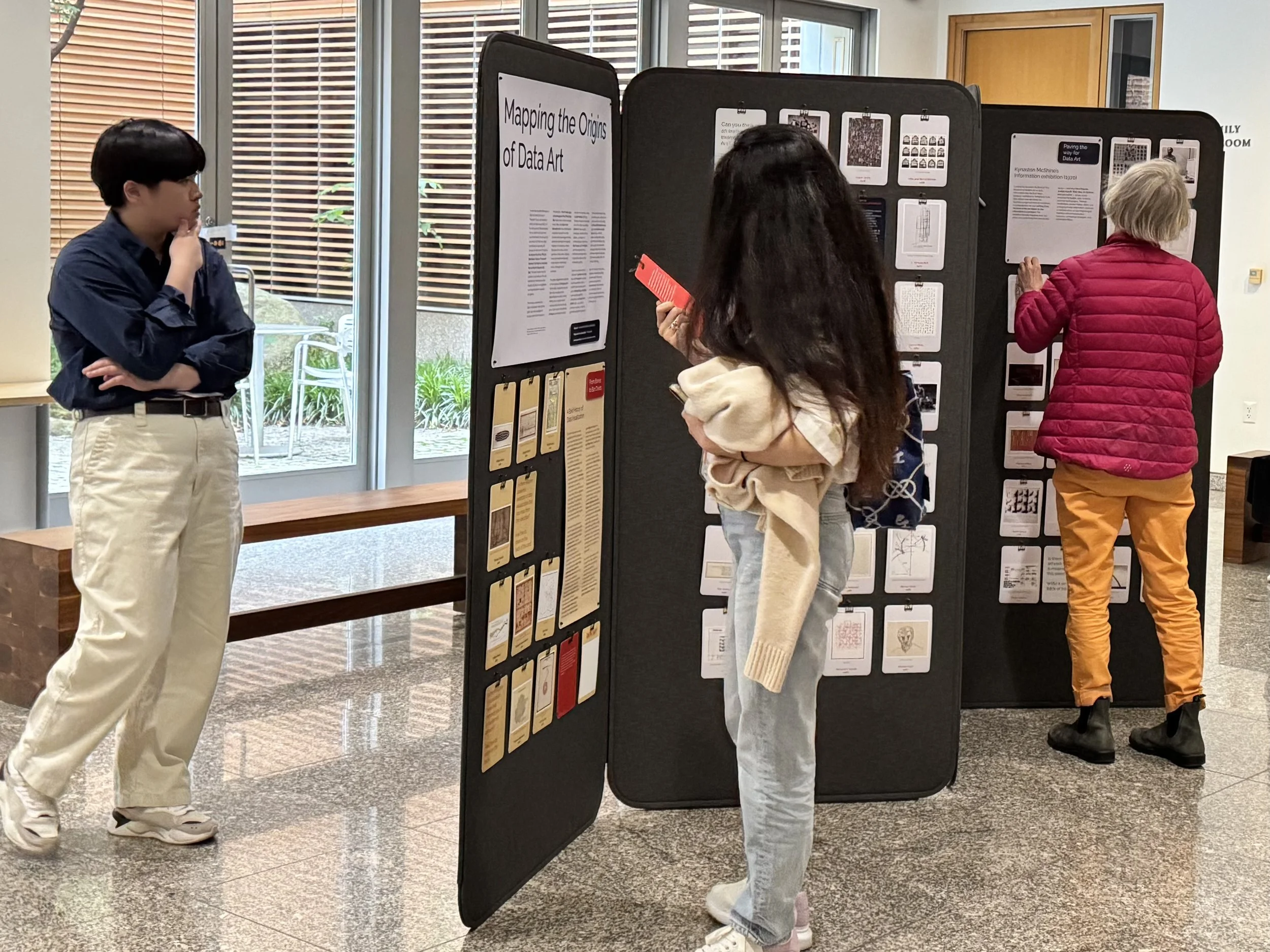
A physical installation for the Data | Art Symposium designed to spark interaction and conversation among attendees
Product
The exhibit presented a research project that foregrounds artists whose contributions to art history and data-driven practice are both pioneering and enduring.
Content
Illustrator
Google Sheets
Rawgraphs
Tools
This project charts the emergence of data-driven artistic practice, collecting over one hundred pioneering works to reveal how artists across continents have been using information, systems, and algorithms as creative material—long before the advent of Big Data and AI. Commissioned by the BarabásiLab, the research was led by Veronika Molnár and Albert‑László Barabási, with exhibition and data-visualization design by me, Tina Rosado.
The purpose of the project launched the first public showcase of this ongoing research, marking the beginning of a broader effort to map the evolution of Data Art — investigating how creativity, computation, and culture have intertwined for more than half a century. Its goal was to spark dialogue among symposium participants and to inspire both critique and collaboration around the research.
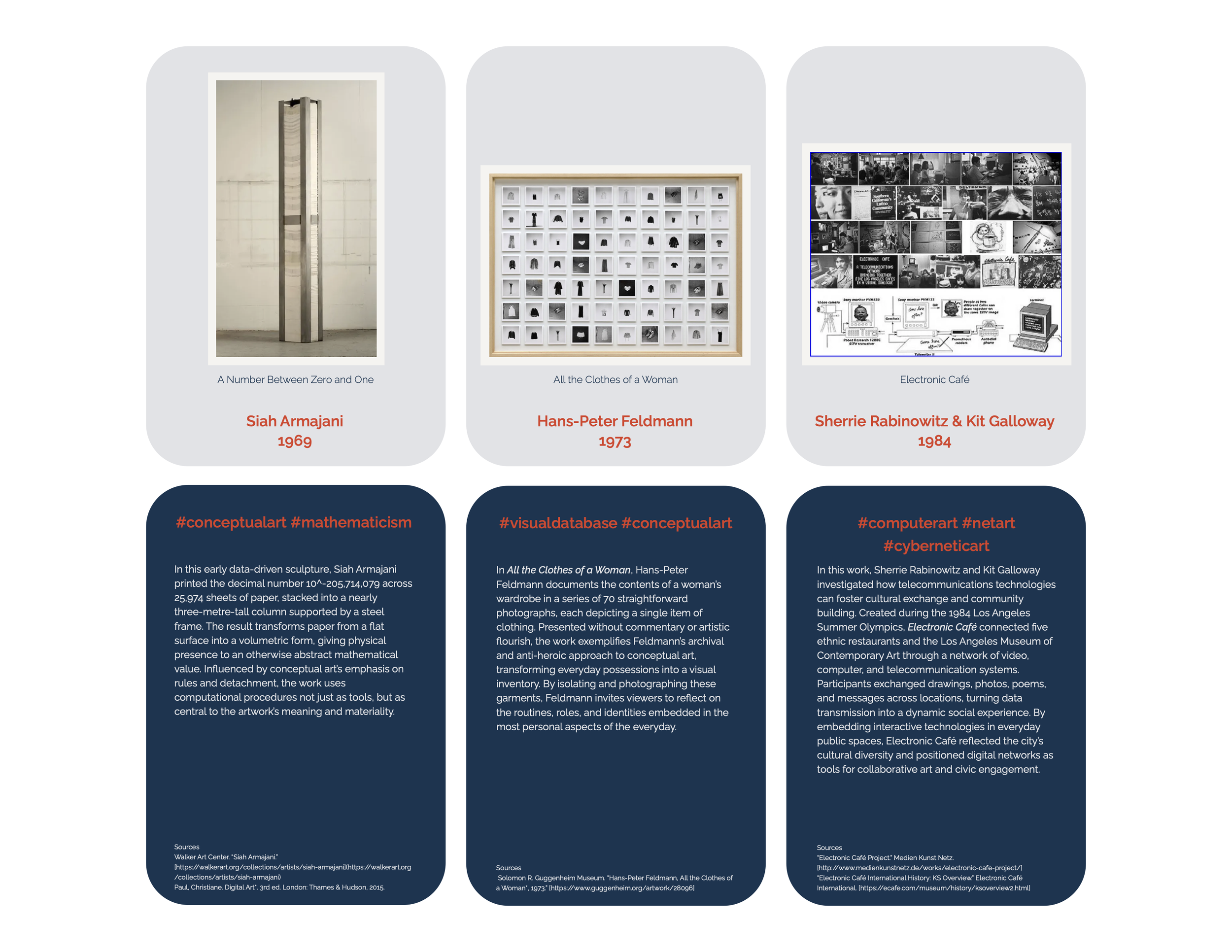
The exhibition featured a set of research cards, each highlighting a key artwork, artist and year, paired with short curatorial texts that explore artistic approaches such as conceptual, cybernetic, feminist, generative and AI-based art. Conference participants were invited to browse the cards and explore how data became both material and message: used to critique institutions, model systems and translate invisible processes into visual or experiential form.
Project Overview

“I am fascinated by how information can become both subject and medium, how data can be turned into art, critique and revelation.”
The research draws connections between the early practices of conceptual artists who treated information as form, the algorithmic compositions of early computer art, the systemic logic of cybernetic art, and the politically-charged works of feminist and activist artists who transformed data into a tool of critique and visibility. It highlights figures such as On Kawara, Vera Molnár, Hanne Darboven, Hans Haacke and the Guerrilla Girls — artists whose engagement with data and structure upended the conventional narratives of art, authorship and social systems.
At the end of the showcase, a data visualization mapped the timeline of artistic approaches alongside the geographical distribution of the artists, illustrating how these practices developed across North America, Europe, South America and Asia. While Western institutions and technologies provided much of the early infrastructure, the research also brings into view significant contributions from women artists who have too often been overlooked in the dominant narratives of digital art history.
Through this ongoing investigation, the project aims to chart the intellectual and creative networks that have shaped Data Art as a field — revealing how artists have long used information to question systems, visualise connections and reimagine the world through data.
This project was developed for the Data | Art Symposium held at Harvard University during June 2025.
At the end of the showcase, a data visualization mapped the timeline of artistic approaches alongside the geographical distribution of the artists, illustrating how these practices developed across North America, Europe, South America and Asia. While Western institutions and technologies provided much of the early infrastructure, the research also brings into view significant contributions from women artists who have too often been overlooked in the dominant narratives of digital art history.
Data Visualization

“I confess that I feel very accomplished when an expert in their field leans toward their neighbor, points to a single data point in my work, and says —That’s so interesting.”
Installation process at Harvard University
Data | Art Symposium
June 11-12, 2025
“Hosted by BarabásiLab and metaLAB, Data | Art is a space for exchange and reflection on the ways in which data is collected, interpreted, and mobilized - shaping not only images and narratives, but also institutions, disciplines, and lived realities.”